
The Odyssey
Basic Facts
The Odyssey (Ancient Greek: Ὀδύσσεια) is an ancient Greek epic poem traditionally attributed to the blind poet Homer. Composed around the 8th century BCE, it is the second of the two Homeric epics, following The Iliad. The poem consists of 24 books and 12,110 lines, written in Homeric Greek in dactylic hexameter. It is one of the oldest surviving works of Western literature, alongside The Iliad and the Epic of Gilgamesh.
Plot Summary
The story employs a narrative technique that begins in medias res. After the fall of Troy, most Greek heroes have returned home, but Odysseus, the king of Ithaca and mastermind of the Trojan Horse, is trapped on the island of Ogygia by the nymph Calypso. Meanwhile, his wife Penelope is besieged by suitors, and his son Telemachus, urged by the goddess Athena, sets out to seek news of his father. The main body of the epic is Odysseus’s flashback recounting his ten years of wanderings: he encounters the Cyclops Polyphemus, the wind god Aeolus, the Laestrygonians, the witch Circe, the underworld, the Sirens, the monsters Scylla and Charybdis, and finally the seven-year captivity with Calypso. The Phaeacians escort him to Ithaca, where he reunites with Telemachus, slays the suitors, and is reunited with Penelope.
Core Themes
The central theme is nostos (homecoming), the arduous journey of return. The epic celebrates human endurance, intelligence, and courage: Odysseus overcomes supernatural obstacles through wit and perseverance. It also explores loyalty (Penelope’s fidelity), filial duty (Telemachus’s coming-of-age), justice (the punishment of the suitors), and the interplay between fate and divine will. The poem employs about 40 “Homeric similes” that link heroic action to everyday life, enriching the narrative.
Composition and Background
The Odyssey originated as oral poetry, sung by bards over generations. Homer, if he existed, likely compiled and shaped these oral traditions into a unified work. The “Homeric Question” debates whether the two epics were by the same author. The poem reflects memories of the Mycenaean age (12th–11th centuries BCE) and the Trojan War, but also embodies the values of 8th-century BCE Greek society. It was first transcribed around the 8th–7th centuries BCE and later divided into 24 books by Alexandrian scholars.
Legacy and Influence
The Odyssey is a cornerstone of Western literature. It influenced Dante, Shakespeare, and countless later writers; James Joyce’s Ulysses directly parallels its structure. Its themes of wandering and homecoming have become archetypal. The epic has been adapted into films, operas, and novels, and continues to inspire modern interpretations, including the concept of the “Odyssey period” in psychology. Its enduring power lies in its timeless exploration of human resilience and the longing for home.
The Odyssey's translation history spans over two millennia, beginning with Livius Andronicus's Latin Odusia in the 3rd century BCE, which became a standard school text in ancient Rome. In the 14th century, Nicholas Sigeros brought Homeric manuscripts to Petrarch, and Giovanni Boccaccio commissioned Leontius Pilatus to produce Latin prose translations, though only the Iliad was completed. The first printed Greek edition appeared in Milan in 1488, edited by Demetrios Chalkokondyles. The 16th century saw a surge in vernacular translations, including Andreas Divus's word-for-word Latin version and Girolamo Baccelli's Italian Odyssey in free verse (1582). Salomon Certon's French translation in Alexandrine couplets (1604) fell out of favor after the Académie Française's language reforms. In English, George Chapman completed the first full translation of both epics in 1616, following Arthur Hall's partial 1581 Iliad based on a French intermediary. The poem's enduring influence is profound: it formed the core of ancient Mediterranean education, was adopted by Western humanists, and, according to Robert Browning, the scholarship at the Library of Alexandria laid the foundation for European philology. A BBC Culture poll of experts named it literature's most enduring narrative.
About the Author
Life and Origins
Homer (Ancient Greek: Ὅμηρος, c. 8th century BCE) is the legendary ancient Greek poet credited with composing the Iliad and the Odyssey. Very little is known about his life, and much of what is recorded comes from later tradition. He is thought to have been born in Ionia, on the coast of Asia Minor (modern Turkey), with the island of Chios being one of seven cities claiming to be his birthplace. His dates are uncertain, but historians generally place him around the 8th century BCE, though some ancient sources suggest he lived as late as the 7th century.
Identity and Legend
Homer was traditionally depicted as a blind bard, an image derived from the blind poet Demodocus in the Odyssey itself. He was highly revered in ancient Greece; Plato called him “the educator of Greece,” and Dante in the Divine Comedy referred to him as “poet sovereign.” However, the historical reality of Homer has been fiercely debated since the 18th century, a controversy known as the “Homeric Question.” Some scholars argue that Homer was a single creative genius who unified existing oral traditions, while others, following Friedrich August Wolf, propose that the epics are compilations of shorter songs by multiple poets. Modern scholarship generally accepts that the two epics were likely composed by different poets, but the name “Homer” remains a convenient label for the authorial tradition.
Major Works
Homer’s attributed works are the Iliad (15,693 lines, 24 books) and the Odyssey (12,110 lines, 24 books). The Iliad focuses on the wrath of Achilles during the Trojan War, while the Odyssey recounts Odysseus’s ten-year journey home. Both poems are written in Homeric Greek, a literary dialect mixing Ionic and Aeolic features, and employ dactylic hexameter. They were originally composed and transmitted orally, only later being transcribed and divided into books by Alexandrian scholars. The Homeric Hymns were also once attributed to him, but are now considered anonymous works.
Death and Legacy
Legend holds that Homer died on the island of Ios, but details are obscure. Despite the lack of biographical certainty, his influence is unparalleled. The Homeric epics became the foundation of ancient Greek education, ethics, and literature, and they have shaped the Western literary canon for over two millennia. Poets from Virgil to Dante, Milton, and Joyce have drawn directly on his themes and structures. Homer remains a byword for epic greatness, and his works are still read, studied, and adapted worldwide, cementing his status as one of the most influential authors in history.
StoryFlow
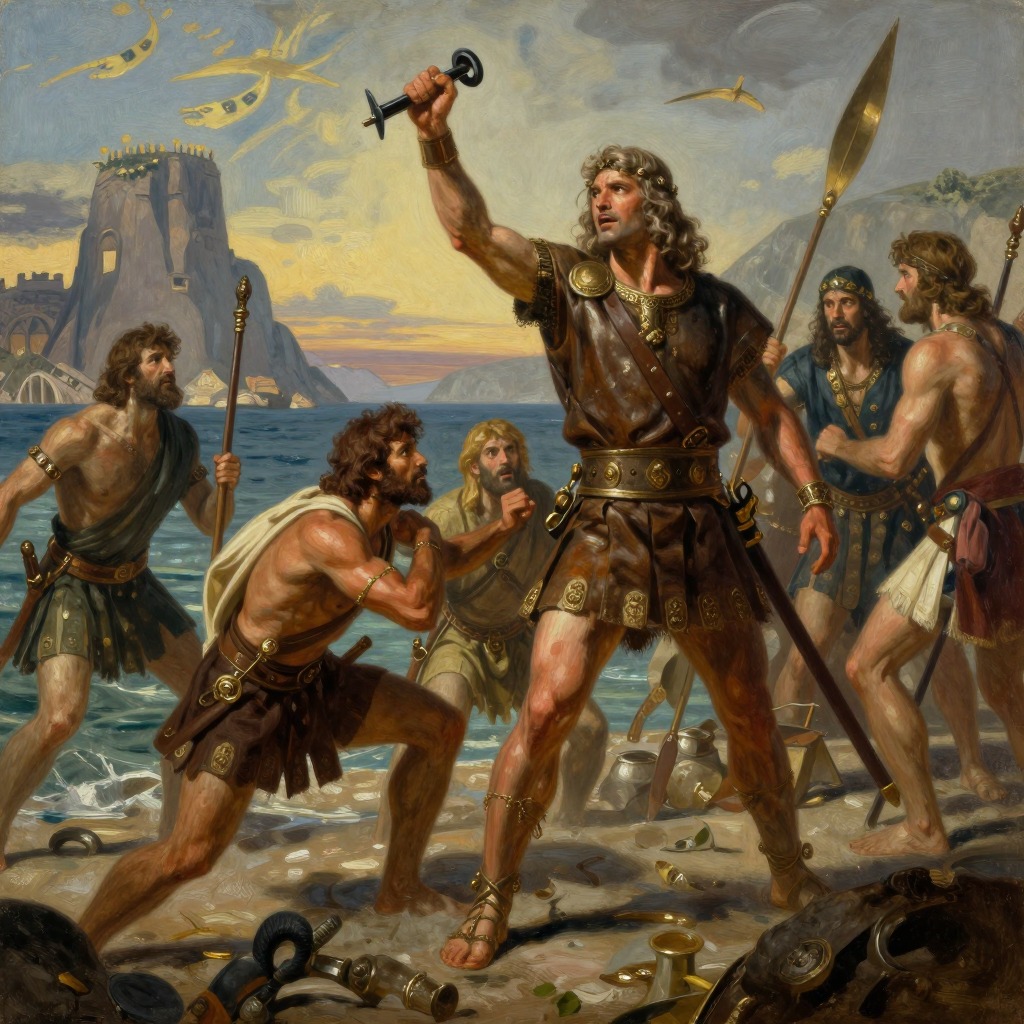
Odysseus's Homecoming
Odysseus's long and arduous journey from Calypso's island to his return to Ithaca, culminating in his revenge.
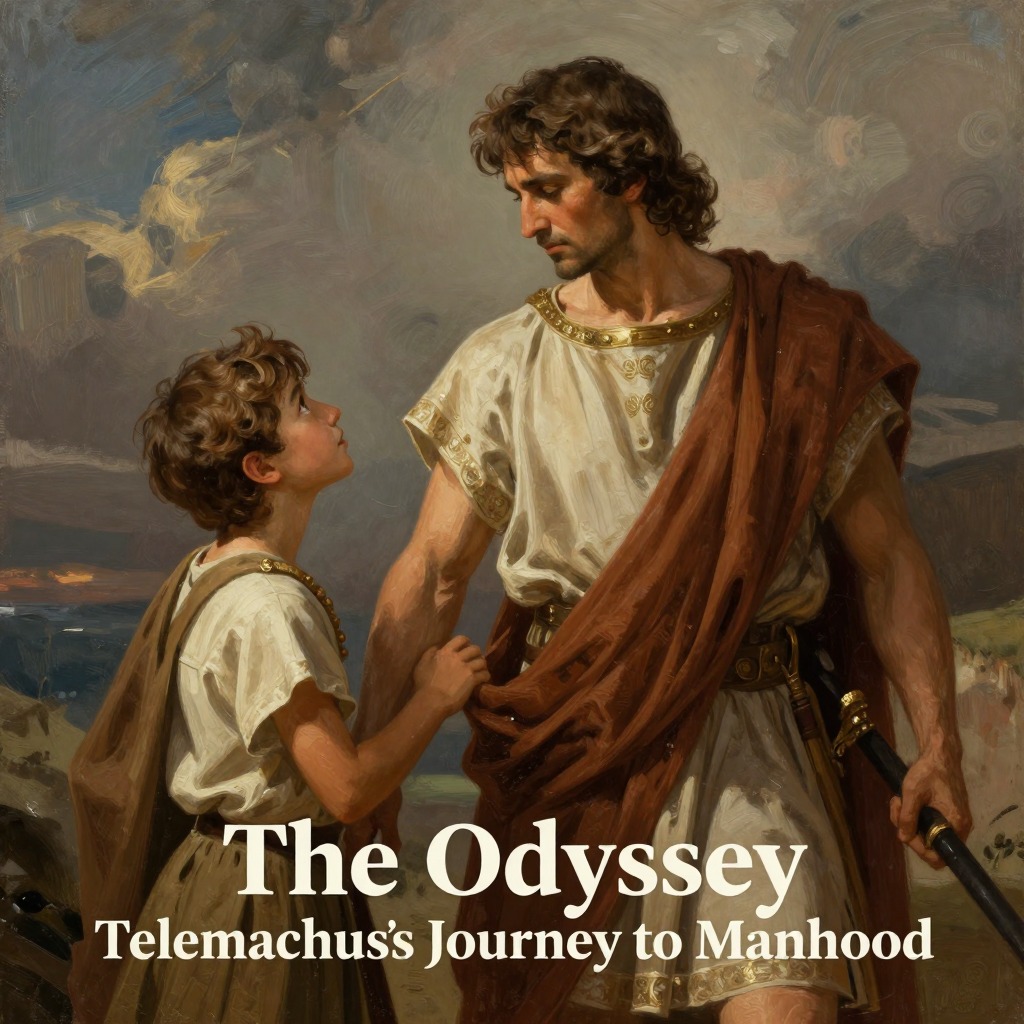
Telemachus's Journey to Manhood
Telemachus's growth from a passive youth to an active hero through his quest for news of his father.
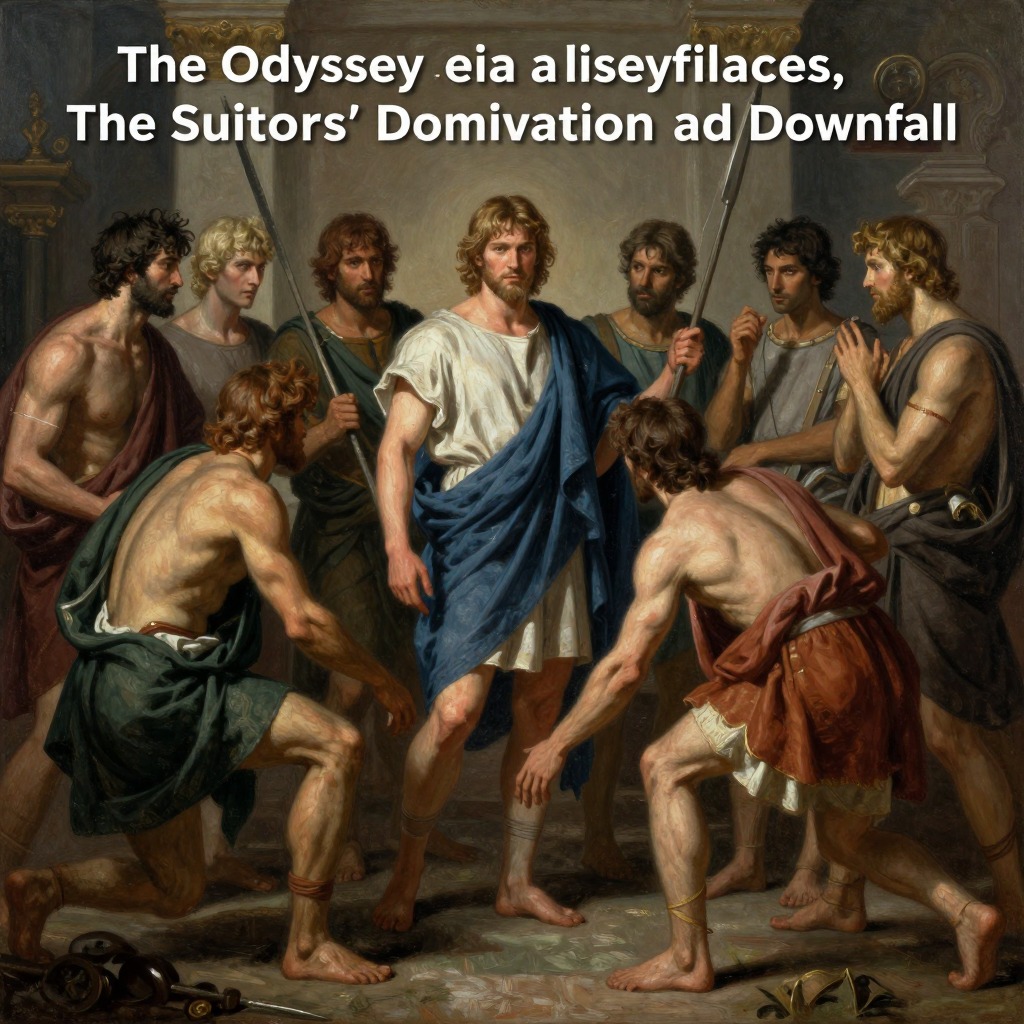
The Suitors' Domination and Downfall
The suitors' abuse of hospitality, their plot against Telemachus, and their eventual destruction by Odysseus.
